
What is checked in a vehicle MOT?

Is your MOT coming up, or are you unsure what’s actually checked during the test?
For any vehicle over three years old, an MOT is a legal requirement and a vital check to keep you, your passengers, and other road users safe.
In this guide, we’ll break down exactly what happens during an MOT, explain what MOT advisories really mean, and show you how easy it is to book your next MOT, so you can avoid surprises and stay road-legal with confidence.
What is checked in a MOT test – The overview
The primary goal of an MOT test is to ensure your vehicle is safe, roadworthy and environmentally compliant.
During the test, a certified MOT tester will inspect several key areas of your vehicle, including:
- Safety Components: Brakes, lights, tyres and steering
- Vehicle Structure: Bodywork, chassis and suspension
- Environmental Compliance: Exhaust and emissions
- Visibility and Controls: Windscreen, motors and wipers
Think of the MOT as a snapshot of your car’s overall condition, rather than a full service.
While it doesn’t include routine maintenance like oil changes, it does identify faults that could make your vehicle unsafe or illegal to drive if left unaddressed.
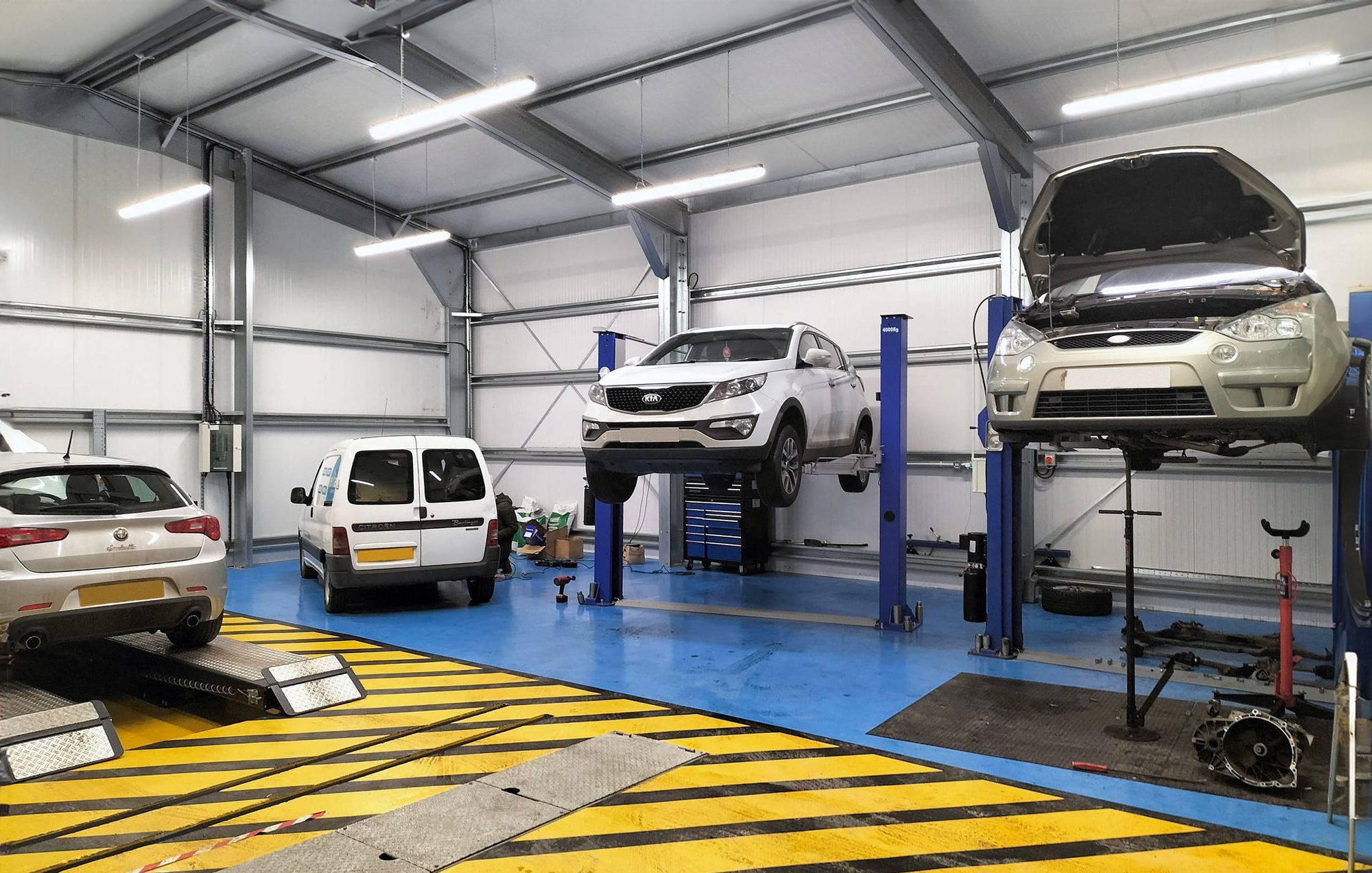
The checks – In detail
Lights, Indicators & Reflectors
- Headlights and taillights are checked for correct operation, alignment and brightness.
- Indicators and hazard lights must function properly to clearly signal your intentions to other road users.
- Brake lights and number plate illumination are inspected to ensure they meet safety and legal requirements.
Brakes & Tyres
- Braking performance is assessed, including brake pads, discs, handbrake operation, and brake fluid levels.
- Tyres are checked for the minimum tread depth (1.6mm) and inspected for cuts, bulges, uneven wear, or damage.
Steering & Suspension
- The steering system must be smooth and responsive.
- Shock absorbers and springs are inspected for wear, leaks, damage, and secure mounting.
Vehicle Structure & Body
- The chassis and bodywork are examined for corrosion or damage that could affect safety.
- Doors and mirrors must open, close and remain secure.
- Any sharp edges or hazards that could injure passengers or pedestrians are identified.
Seatbelts & Seats
- Seatbelts are checked for signs of fraying, cuts, or damage and must operate correctly.
- Seats must be securely fixed, with all adjustment mechanisms working as intended.
Exhaust, Emissions & Fuel System
- The exhaust system is inspected for leaks, damage and secure mounting.
- Emission levels must meet current UK environmental standards.
- The fuel system is checked for leaks or damage that could pose a fire risk.
Windscreen, Wipers & Mirrors
- The windscreen must be free from significant cracks and chips that could obstruct the drivers view.
- Wiper and washers must function properly
- Mirrors must be intact and secure to provide clear visibility around the vehicle.
To complete the inspection, the horn and speedometer may also be checked, ensuring all essential controls are working as they should.
What are MOT advisories?
If your vehicle passes its MOT but receives an advisory, it means the car is currently roadworthy and legal to drive, but there is an issue that may worsen or become unsafe in the near future.
An advisory does not prevent you from driving legally, but it does act as an early warning.
Addressing advisories promptly allows you to schedule maintenance and repairs in advance and helps reduce the risk of failing your next MOT or facing unexpected repair costs.
Common MOT advisories include:
- Minor tyre wear that is above the legal limit but showing signs of deterioration.
- Worn suspension components such as shocks or springs, that are still functional but are nearing the end of their lifespan.
- Brake pads that remain legal but will require replacement soon.
Taking these advisories seriously helps keep your vehicle safe, reliable and road-legal year-round.
How do you book an MOT?
Most garages allow you to book your MOT online, simply by selecting a date and time that suits you and entering your vehicle registration details.
You can also call your local MOT garage or book in person, if you prefer to speak to someone directly.
Your MOT can be booked up to one month before its expiry date, without affecting your renewal date, making it easier to plan ahead and avoid last-minute stress.
It’s also worth considering combining your MOT with a service or repairs, as this allows any minor issues identified during the test to be addressed quickly and conveniently.
Read our article on driving with an expired MOT.
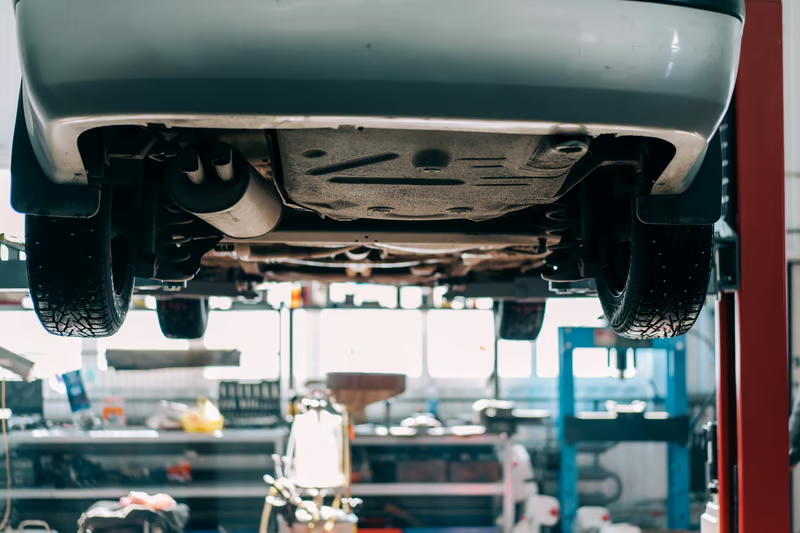
Ready to book your MOT?
Understanding the MOT checklist helps you stay informed about your vehicle’s safety and roadworthiness.
While an MOT isn’t a full service, it highlights the critical areas such as brakes, tyres, lights and emissions that keep you safe on the roads.
At Elite Vehicle Repairs, we make the MOT process simple, reliable and stress-free:
- Class 1,2,4 & 7 MOT tests for vehicles covering cars, vans, motorhomes and motorcycles
- Quick and convenient appointment slots to suit your schedule
- Repairs handled in house, saving you time and hassle
Book your MOT today via our live online booking system and drive with confidence.





© Elite Vehicle Repairs - 2026
