
How far can you drive in limp mode?

Is your vehicle struggling to accelerate, refusing to change gear or displaying warning lights on the dashboard? If so, your vehicle may have entered limp mode.
Limp mode is a safety feature designed to protect your engine, transmission and other critical components when a fault is detected.
By reducing power and limiting performance, it helps prevent further damage while allowing you to move the vehicle to a safe location.
While it may be possible to drive a short distance in limp mode, whether it is safe to do so depends entirely on the fault that triggered it.
In some cases, you should stop driving immediately and arrange breakdown recovery, as continuing to drive could lead to further damage or leave you stranded.
In this article, we’ll explain what limp mode is, the common causes, how far you can safely drive and when it’s time to arrange breakdown recovery.
Can I keep driving in limp mode?
There is no set distance that you can safely drive in limp mode.
In some situations, you may be able to drive a short distance to reach a safe location or nearby garage, while in others you should stop immediately to prevent further damage.
The distance you can drive will depend on the fault that triggered limp mode. Problems such as a faulty sensor may allow limited driving, whereas issues involving low oil pressure, engine overheating or more serious engine faults could require immediate breakdown recovery.
When your vehicle enters limp mode, you may also notice:
- Reduced acceleration
- Lower top speeds
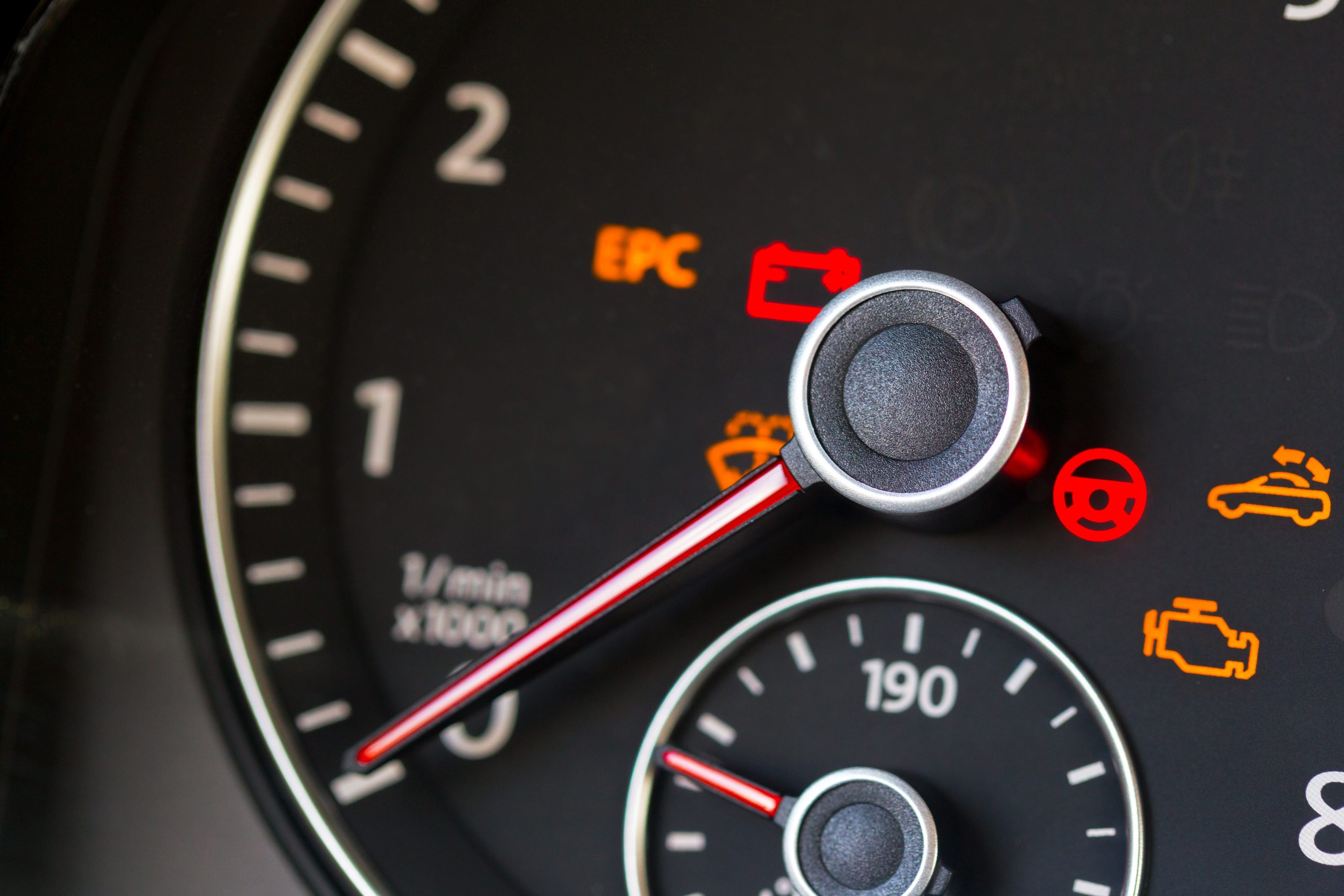
- Warning lights on the dashboard
- Restricted gear changes
As limp mode can be triggered by a wide range of faults, it’s important to have the vehicle inspected by a qualified mechanic as soon as possible to identify the underlying cause.
If your vehicle has significantly reduced power or is unable to keep up with the flow of traffic, continuing to drive could put you and other road users at risk.
In these situations, it’s safest to pull over when it is safe to do so and arrange breakdown recovery.
What should you do if your vehicle goes into limp mode?
If your vehicle displays a restricted performance warning or enters limp mode, try not to panic or accelerate harshly. Instead, follow these simple steps:
1. Pull over somewhere safe
If it is safe to do so, move your vehicle to a safe location away from traffic. This could be in a lay-by or nearby car park, so you can assess the situation without putting yourself at risk.
2. Check for warning signs
Look for any dashboard warning lights and check for obvious signs of a more serious problem, such as:
- Smoke coming from the engine or exhaust
- Burning smells
- Engine overheating
- Low oil pressure warning lights
- Coolant warning lights
- Unusual knocking or grinding noises
If you notice any of these warning signs, it is safest to stop driving as soon as it is safe to do so and arrange breakdown recovery.
3. Avoid continuing your journey unnecessarily
If the vehicle has lost significant power or cannot safely keep up with traffic, avoid continuing your journey.
Driving with a serious fault could cause further damage and increase repair costs.
4. Arrange a vehicle inspection
Even if your vehicle appears to drive normally after restarting, it’s important to have it inspected by a qualified mechanic.
Limp mode is designed to alert you to an underlying issue that should be diagnosed and repaired as soon as possible.
Why has my vehicle gone into limp mode?
Limp mode can be triggered by a range of mechanical or electrical faults. While it’s often impossible to know the exact cause without a professional diagnostic inspection, some of the most common reasons include:
Faulty sensors
Modern vehicles rely on a network of sensors to monitor engine performance.
If one of these sensors provides an incorrect reading, the vehicle may enter limp mode.
Engine overheating
An overheating engine can trigger limp mode to help reduce the risk of further damage.
This may be caused by low coolant levels, a faulty thermostat or another cooling system issue.
Low oil pressure
Low oil pressure can prevent vital engine components from being properly lubricated, increasing the risk of serious engine damage.
Diesel particulate filter (DPF) problems
If your vehicle runs off diesel, one of the most common causes of limp mode is a fault with the DPF.
If the DPF becomes blocked, your exhaust flow can be restricted, and your engine performance is reduced.
Turbocharger or transmission faults
Problems with the turbocharger or gearbox can also trigger limp mode, as they affect how power is delivered to the wheels and may risk further damage to the vehicle.
When should you call breakdown recovery?
It is important to understand that limp mode is designed to help you move your vehicle to a place of safety, not to continue your journey as normal.
If you are unsure whether your vehicle is safe to drive at all, it’s always better to be cautious.
You should arrange breakdown recovery if:
- Your vehicle has little or no acceleration.
- The engine is overheating.
- A red warning light has appeared on the dashboard.
- You notice smoke, burning smells or unusual noises.
- The vehicle has stopped completely.
- You are on a motorway or busy road and cannot continue safely.
Attempting to drive when your vehicle is experiencing a serious fault can cause further damage, increase repair costs and put both you and other road users at risk.
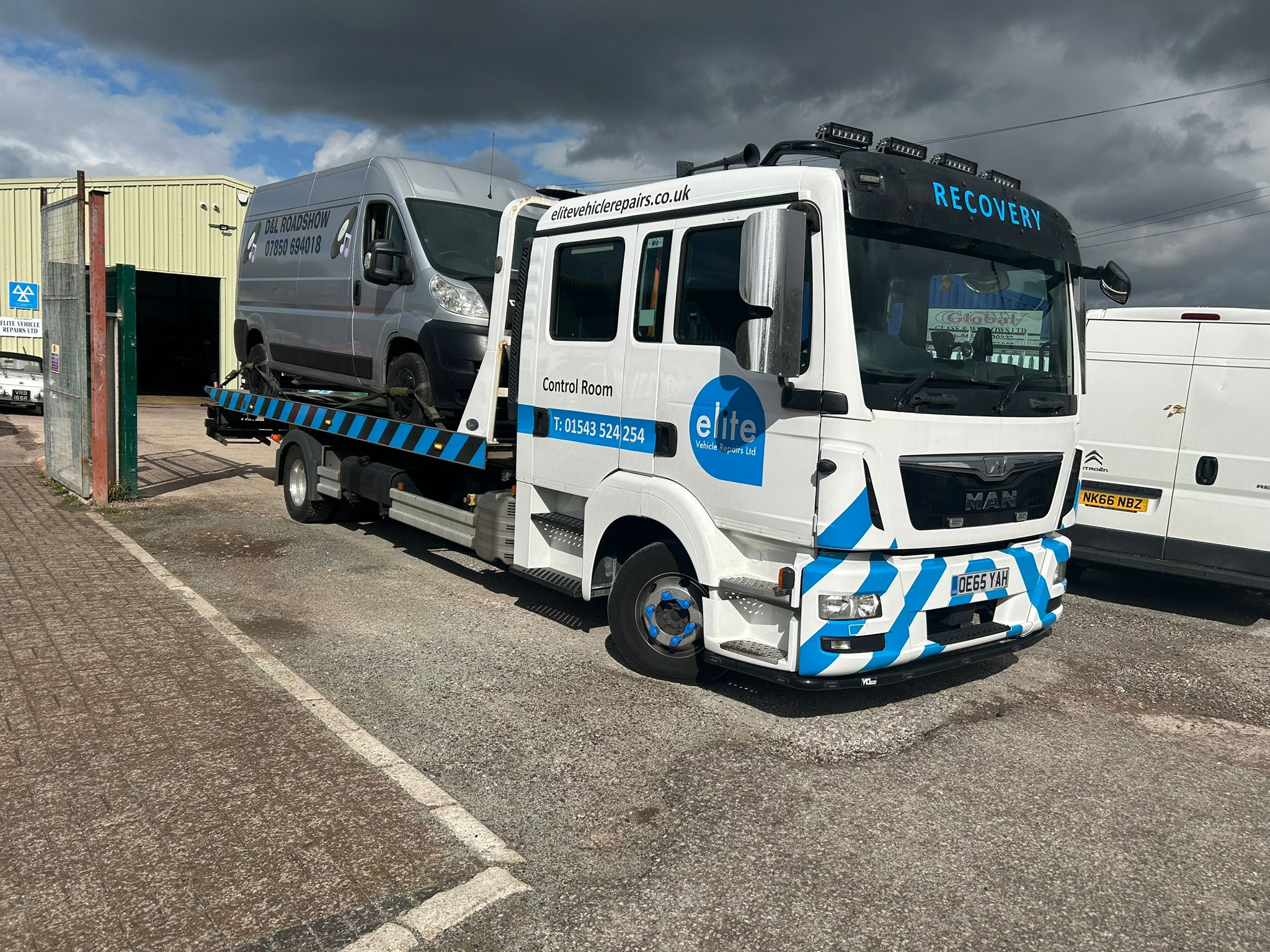
At Elite Vehicle Repairs, we offer a 24-hour breakdown recovery service, helping you and your vehicle get safely home or to our garage for professional diagnosis and repair.
Get back on the road with Elite Vehicle Repairs
Whether your vehicle has entered limp mode or you’ve broken down unexpectedly, Elite Vehicle Repairs is here to help.
Our experienced team provides fast, reliable breakdown recovery, helping you get your vehicle to a safe location or trusted repair garage.
Contact us today for fast, reliable assistance.





© Elite Vehicle Repairs - 2026
